
The Church’s Deaths and Their Human Cost
La piel del tamborThis flow follows the three deaths associated with the parish as a progression from ambiguous accidents to a confirmed homicide and unresolved guilt.
increasing Bearing strength in each event
 decreasing
Bearing strength in each eventdecreasingPeñuelas Falls
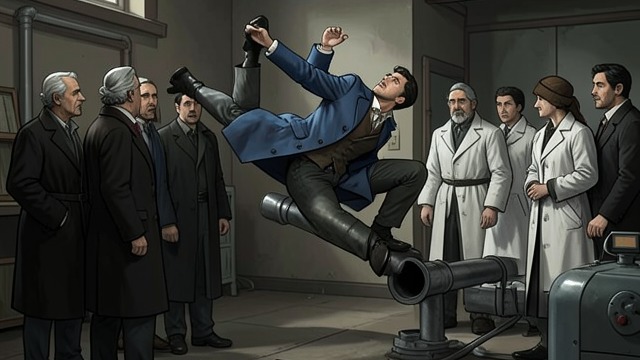
Peñuelas Falls
An inspection turns fatal
Municipal architect Peñuelas examines the church roof while preparing a ruin report. A rotten railing gives way, and he falls onto an exposed metal tube.
Consequences for the church
The death halts the ruin procedure and gives the parish dispute a more ominous character. The police find no proof of tampering, leaving accident as the official conclusion.
Urbizu Is Struck
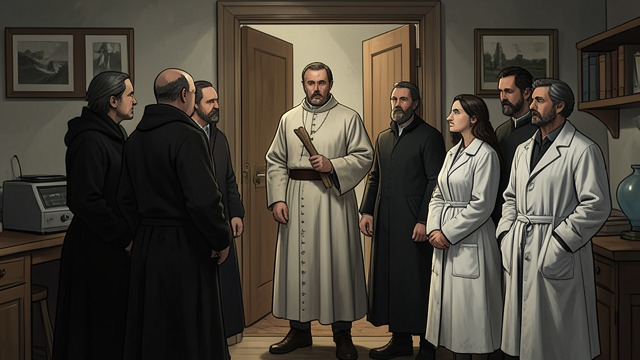
Urbizu Is Struck
A second fatal accident
Padre Urbizu visits the church on Corvo’s behalf and dies when a piece of cornice falls on him. No witness sees the moment, and investigators find structural damage that could explain the fall.
An archbishop’s anger
Corvo treats the death as personal and promises not to leave a stone standing. The accident intensifies both his grief and his determination to clear the parish.
Bonafé Enters the Story
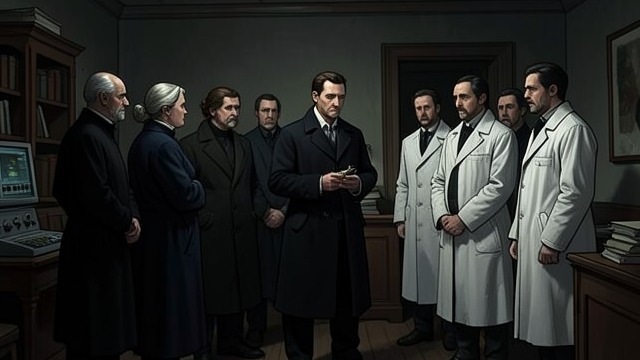
Bonafé Enters the Story
A reporter follows the dispute
Bonafé investigates the parish, the bank, the priests, and Macarena. He seeks statements and scandal, moving through the same network of people already under pressure.
A material clue
He discovers the imitation pearls and removes one from the Virgin statue. His inquiry now touches the church’s sacred objects and the hidden financing of its repairs.
A Death in the Confessional
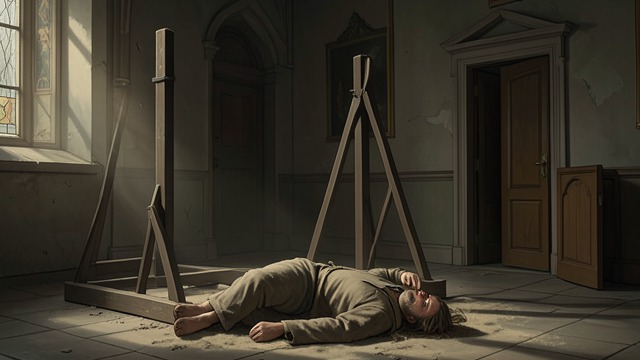
A Death in the Confessional
A violent ending
Bonafé dies after falling or being pushed from the church scaffold. He crawls into the confessional, where his body is found the next morning.
A new legal crisis
Unlike the previous deaths, his appears to involve direct human action. Ferro’s disappearance places the parish priest under immediate suspicion.
Guilt without Full Explanation
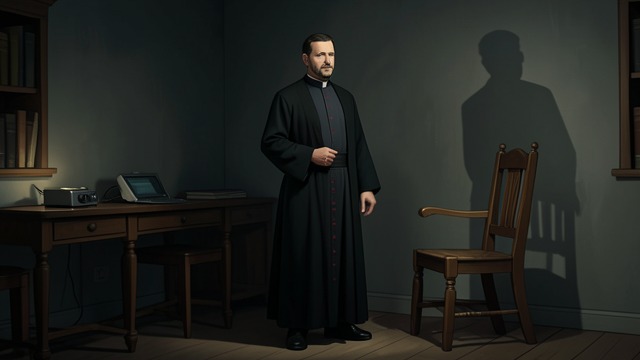
Guilt without Full Explanation
A confession accepted
Ferro admits that he killed Bonafé and is found responsible for involuntary homicide. The legal process produces a judgment but little explanation of the motive or precise circumstances.
Earlier deaths remain open
Ferro neither confirms nor denies responsibility for Peñuelas and Urbizu. Their deaths continue to hover over the parish, preserving the novel’s uncertainty about chance, negligence, and providence.
about three months before Quart arrives
within the three months before the investigation
the days before the third death
the night before the scheduled Thursday Mass
after Ferro is arrested and tried
